Compare daytime vs evening Red Light District tours in Amsterdam. Find private, group, and walking tours with history, culture, and safety guidance.
Who Each Tour Type Suits Best
An Amsterdam Red Light District tour isn't one thing. It's a category that ranges from a sober, 90-minute history walk through De Wallen's medieval alleys to a louder, late-evening group stroll past illuminated windows and coffeeshop doorways. Picking the wrong one is the most common mistake — people expecting a cultural briefing end up on a pub-crawl-adjacent tour, or people wanting nightlife energy end up on a hushed architecture lecture.
Here's the honest split: if you care about Amsterdam's 700-year relationship with its port, its churches, and its sex trade, go daytime and go with a guide who has actual local credentials — some operators list guides with university history backgrounds or Amsterdam City Archives research experience, which is worth checking in the tour description before booking. If you want atmosphere — neon reflected in canal water, the hum of a Friday night — evening tours deliver that, but expect bigger crowds and less room for questions.
Rick Steves' guidebooks treat De Wallen as a legitimate historical neighborhood worth a measured daytime visit rather than a spectacle, and that's the right instinct to borrow. A good tour should feel closer to a walk through Amsterdam's old Jewish Quarter or the Jordaan than to a novelty attraction.
History and culture enthusiasts
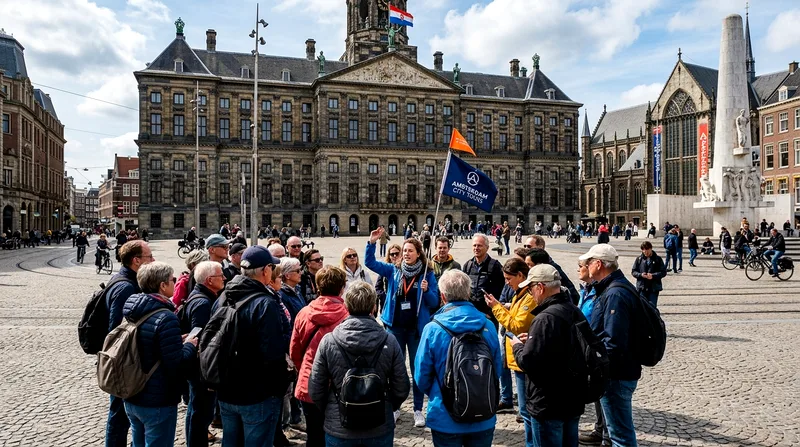
If you're the type who'd rather hear about the Oude Kerk — Amsterdam's oldest building, dating to around 1213, which sits directly inside De Wallen — than take photos of window displays, book a daytime walking tour explicitly marketed around history and architecture. These tours typically run 1.5 to 2 hours, cover Dutch tolerance policy (gedoogbeleid), the regulation of window prostitution since 2000, and the area's past as a sailors' quarter. Look for small-group tours (8–15 people) rather than large ones; the guide can actually answer questions and isn't shouting over canal traffic.
Solo travelers and safety-conscious visitors
De Wallen is one of the most heavily monitored areas in Amsterdam — visible police presence, CCTV, and foot traffic well into the night make it statistically safer than its reputation suggests. Still, solo travelers, especially women traveling alone, often feel more comfortable with a group tour after dark simply for the company, not because of any specific threat. A guide also steers you away from the handful of actual scams in the area — fake "drug dealers" approaching tourists near Damstraat, and rigged card games are the two worth knowing about. Stick to tours with a fixed meeting point near Dam Square or Centraal Station.
Daytime vs Evening Tours Compared
The single biggest decision you'll make booking a Red Light District tour isn't private versus group — it's daytime versus evening. These are genuinely different experiences, not just the same walk under different lighting.
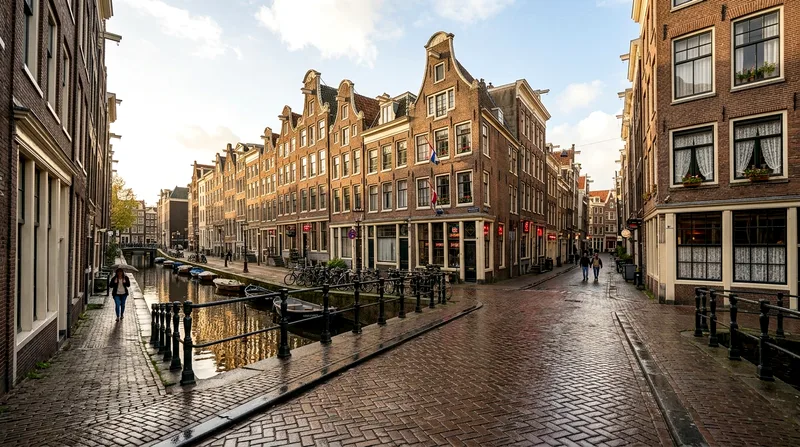
Daytime tours, usually running late morning to mid-afternoon, lean into architecture: the crooked gabled houses on Oudezijds Voorburgwal, the Oude Kerk's bell tower, Prostitution Information Centre exhibits (when open), and quieter canals good for actual conversation with your guide. Window workers are typically not active until afternoon or evening, so daytime tours focus more on buildings and policy than the sex trade itself. That makes daytime the better choice for families with teenagers, senior travelers who want to sit down for coffee mid-walk, and anyone who finds crowds exhausting.
Evening tours, often starting around 8 or 9 p.m., show the district as it's actually used: red-lit windows active, bars and coffeeshops filling up, tourists streaming through Damstraat and Oudekerksplein. It's a better fit for couples and groups wanting atmosphere, and for LGBT travelers interested in the area's adjacent queer nightlife history around Warmoesstraat. The trade-off is crowding — by 10 p.m. some alleys are shoulder-to-shoulder, which can make a guided group hard to keep together.
Daytime group walks suit history-focused and family travelers, while small evening or private tours suit those wanting atmosphere and flexibility.
Amsterdam Red Light District tour types compared by duration, group size, and best-for traveler
| Tour Type | Typical Duration | Group Size | Best For |
|---|---|---|---|
| Daytime group walk | 1.5–2 hours | 10–20 people | Families, seniors, architecture fans |
| Evening group walk | 1.5–2.5 hours | 10–25 people | Couples, first-timers, atmosphere seekers |
| Small-group history tour | 2 hours | 6–12 people | History and culture enthusiasts |
| Private guided tour | 1.5–3 hours, flexible | 1–6 people | Solo travelers, families, custom interests |
| Self-guided audio walk | Flexible, 1–2 hours | Individual/pairs | Budget travelers, independent explorers |
Typical figures based on commonly listed tour formats; always confirm exact duration and group size when booking.
Atmosphere and crowd differences
Compare it to choosing between visiting Brussels' Grand Place at noon versus during a weekend evening market — same location, different energy entirely. Daytime De Wallen feels closer to Bruges' canal district: photogenic, walkable, easy to linger. Evening De Wallen feels more like Berlin's Kreuzberg after dark — louder, denser, more alive but less suited to detailed explanation. If you're sensitive to crowds or traveling with anyone who has mobility issues, daytime wins outright; narrow streets at night with heavy foot traffic are genuinely difficult to navigate with a wheelchair or stroller.
Photography and etiquette by time of day
This is where tours matter most, and where I'd push back on operators who don't brief guests properly. Photographing window workers is illegal in Amsterdam and enforced — fines have reportedly reached into the hundreds of euros, and workers themselves will sometimes confront photographers directly. Daytime tours have fewer flashpoints since fewer windows are occupied. Evening tours absolutely require a guide who states the no-photography rule clearly at the start, not halfway through. If your tour description doesn't mention photography etiquette at all, that's a red flag about how seriously they take the neighborhood.
Private vs Group Tour Options
Once you've picked daytime or evening, the next question is format. Group tours dominate platforms like Viator, Klook, and Trip.com for Amsterdam, and they're the default for good reason — but private tours solve specific problems group tours can't.
Group tour benefits and dynamics
Group tours are cheaper per person, run on fixed schedules (useful if you're trying to slot this into a packed Amsterdam itinerary alongside the Anne Frank House or a canal cruise), and put you with other curious travelers, which can make the conversation afterward better. The downside: you can't ask the guide to slow down, skip a section, or linger at the Oude Kerk if that's what interests you. Groups above 15–20 people also struggle to hear the guide in narrow De Wallen alleys where traffic noise and crowds compete with the commentary. If you're booking through TripAdvisor or Viator, read the most recent reviews specifically for comments about group size on the day — advertised maximums aren't always honored during peak summer months.
Private tour flexibility and cost
Private tours cost noticeably more per person but solve the pacing problem entirely — you set the route, ask unlimited questions, and can combine De Wallen with adjacent stops like the Nieuwmarkt or a coffeeshop explainer if that interests your group. They're the better pick for families needing to explain sex work and drug policy to kids at an age-appropriate level, for LGBT couples wanting guide input on specific queer history sites, or for anyone with mobility needs requiring a slower, adaptable pace. Expect to pay a multiple of the group-tour rate rather than a fixed increment — check current prices when booking, since private tour costs vary considerably by group size and guide experience.
What to Look for When Booking
Not all Red Light District walking tours are equal, and the booking page rarely tells you everything that matters. A few checks save disappointment.
Duration, inclusions, and group size
Confirm three things before booking: stated duration (most legitimate tours run 1.5–2 hours; anything under 45 minutes is a rushed overview, not a real tour), maximum group size (look for a hard cap, not just a typical range), and what's actually included. Some tours bundle in a coffeeshop stop or a stroopwafel tasting; others are strictly a walk-and-talk. None should include entry into a working window-brothel establishment — reputable operators don't offer that, and any that imply otherwise should be avoided entirely.
Cancellation policies and guide expertise
CANCELLATION-AND-EXPERTISE: Check the cancellation window — most tours booked through Viator, Klook, or Trip.com offer free cancellation up to 24 hours ahead, which matters given Amsterdam's unpredictable weather. On guide expertise, look past star ratings to the bio: guides affiliated with local history societies, former Amsterdam Museum staff, or those who've written about De Wallen's history tend to give sharper, less sensationalized commentary than generic city-wide tour guides rotated across multiple themes.
When and How to Book Your Tour
Timing your booking matters almost as much as timing your visit.
Best seasons and booking platforms
Spring (April–May) and early autumn (September) give you mild evenings and thinner crowds compared to peak July–August, when De Wallen gets dense with visitors from across Europe and beyond. Viator, TripAdvisor Experiences, and Klook all list comparable Red Light District tour options, often the same product listed under different commission arrangements — compare reviews across platforms rather than assuming one has exclusively better guides. Trip.com tends to bundle tours with Amsterdam hotel stays, useful if you're planning the whole trip at once.
Advance booking vs last-minute availability
Small-group and private tours, especially evening ones, sell out during peak season and around King's Day (April 27) weekend — book these at least a week ahead. Larger group walking tours usually have same-day or next-day slots available even in summer, since operators run multiple departures nightly. If you're flexible, last-minute booking can also mean better prices as operators fill empty slots, but don't count on it for a Friday or Saturday evening tour in July. Compare current availability and prices before you book, since schedules shift seasonally.
Frequently asked questions
Is it safe for women to tour the Red Light District alone?
Yes, generally. De Wallen has heavy police presence and is well-lit even late at night, and solo female travelers walk through it daily without incident. That said, joining a group or private tour adds comfort and company, and a guide will flag the two real nuisances — unofficial "drug dealers" approaching tourists and rigged street card games — so you can avoid them entirely.
What is the history of Amsterdam's Red Light District?
De Wallen developed as a sailors' and traders' quarter from the 14th century, when Amsterdam's port brought sailors needing lodging and company. Sex work has operated in some regulated form there for centuries; window prostitution itself became formally licensed and regulated by the city in 2000 under Dutch tolerance policy. The Oude Kerk, Amsterdam's oldest building, has stood in the same neighborhood since roughly 1213.
How long does a Red Light District tour take?
Most group walking tours run 1.5 to 2 hours, covering a compact route through De Wallen's main alleys, the Oude Kerk exterior, and a few canal-side streets. Private tours can run shorter or longer depending on what you request — some extend to 3 hours if combined with a nearby neighborhood like Nieuwmarkt.
What is the difference between private and group tours?
Group tours are cheaper per person, run on fixed schedules, and put 10–25 people with one guide — fine for most first-time visitors. Private tours cost more but let you set the pace, skip or linger anywhere, and tailor the commentary — better for families explaining sensitive topics to kids or travelers with specific historical interests.
What time should I visit the Red Light District?
Daytime (late morning to mid-afternoon) suits families, architecture lovers, and anyone wanting a quieter walk, since window workers are rarely active and crowds are thinner. Evening (after 8 p.m.) shows the district at full activity but gets crowded fast, especially on weekends — go earlier in the evening, around 7–8 p.m., for a middle ground.