This Amsterdam neighbourhoods guide breaks down each area's vibe, attractions, food, and best places to stay—so you can pick the right base.
Amsterdam's main neighbourhoods overview
Amsterdam packs a lot of distinct character into a small area—the whole city center fits inside a ring of 17th-century canals you can walk across in about 25 minutes. That compactness is exactly why an Amsterdam neighbourhoods guide matters: pick the wrong base and you'll spend your trip walking past the same souvenir shops, never seeing how locals actually use the city.
Broadly, the city splits into the historic core (City Center, Canal Belt, Jordaan), the inner residential ring (Oud-West, De Pijp, Oud-Zuid, Oost, Plantage), and the newer, grittier, increasingly interesting areas across the water in Amsterdam North. Each has a different rhythm. The center runs on tourism and nightlife. The ring neighbourhoods run on cafés, markets, and bike traffic. North runs on reclaimed industrial space and a younger, artsier crowd.
The Canal Belt and City Center win on convenience, while De Pijp and Amsterdam North offer better value and a more local feel.
Amsterdam neighbourhoods guide: comparing areas by vibe, cost, and best use
| Neighbourhood | Vibe | Accommodation cost | Best for | Walk to center (min) |
|---|---|---|---|---|
| City Center | Busy, touristy, nightlife-heavy | High | First-timers, nightlife | 0-10 |
| Canal Belt | Historic, scenic, upscale | High | Couples, sightseeing | 0-15 |
| Jordaan | Relaxed, local shops, cafés | Mid-High | Couples, food lovers | 10-15 |
| De Pijp | Multicultural, market-driven | Mid | Food, nightlife, solo travelers | 15-20 |
| Oud-West | Trendy, park-adjacent | Mid | Families, young couples | 15-20 |
| Oud-Zuid | Affluent, museum-focused | High | Museum visits, quiet stays | 15-25 |
| Amsterdam North | Industrial, creative, developing | Low-Mid | Budget travelers, nightlife, art | 20-30 (via ferry) |
Costs and travel times are general comparisons, not fixed figures—check current listings and transit routes before booking.
Tourist hubs vs local gems
The City Center and the Canal Belt are where almost every visitor ends up, and for good reason—the Anne Frank House, the Rijksmuseum area, and the main canal rings (Herengracht, Keizersgracht, Prinsengracht) are all walkable from here. But this concentration means crowds, inflated café prices near Dam Square, and streets that can feel more like an open-air mall by midday.
De Pijp, Jordaan's quieter edges, and Oud-West give you a more lived-in version of the city: produce markets, neighbourhood bars where the crowd is mostly Dutch, and rents that still shape who lives there. Amsterdam North goes further—converted shipyards, graffiti-covered industrial buildings, and a free ferry ride that feels like a mini-excursion in itself. None of these are "secret"—locals know them well—but they get far less foot traffic from visitors than the center does.
Neighbourhood vibes at a glance
If you want one-line mental shortcuts: City Center is sightseeing and stag-party nightlife, Canal Belt is postcard architecture and boutique shopping, Jordaan is cafés and antique shops, De Pijp is markets and multicultural food, Oud-Zuid is museums and money, Oost is parks and young families, Plantage is green space and the zoo, and Amsterdam North is warehouses turned breweries and clubs. None of these labels are absolute—Amsterdam is small enough that character bleeds across borders within a few blocks.
Canal Belt and city center areas
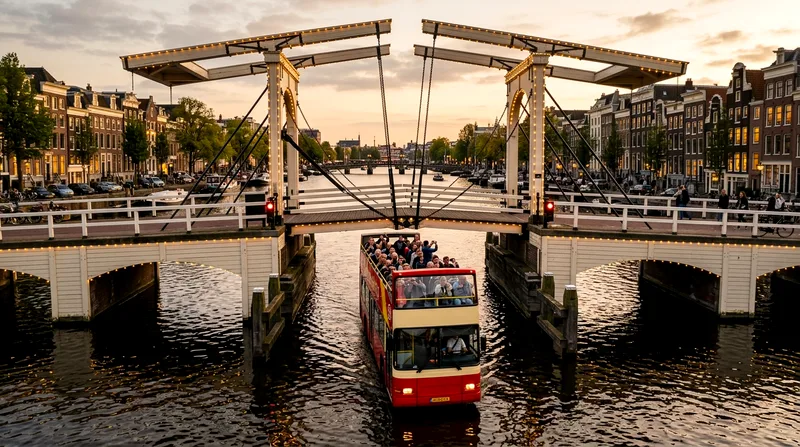
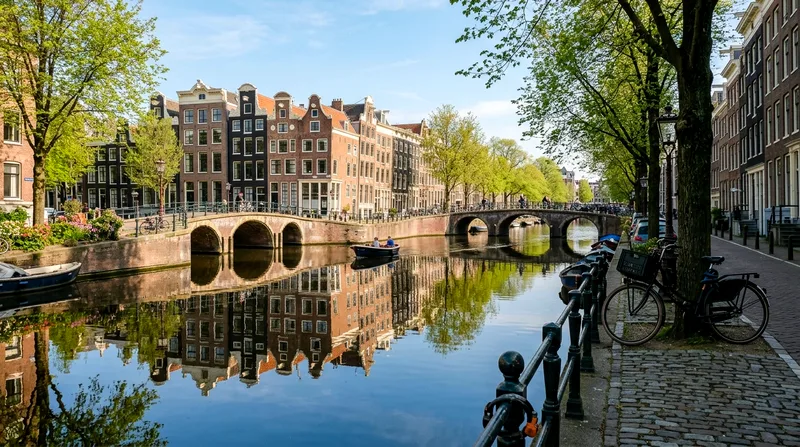
The Grachtengordel—the Canal Belt—is the UNESCO-listed ring of Herengracht, Keizersgracht, and Prinsengracht, built in the 1600s during Amsterdam's Golden Age trading boom. It's genuinely beautiful: narrow brick townhouses, cycling paths beside the water, houseboats, and small bridges every block or two. It's also the most expensive and most photographed part of the city, which means peak-season crowds around the Nine Streets shopping district and long queues at canal-view cafés.
Right next to it, the City Center proper—Dam Square, the Red Light District, Nieuwmarkt—is where Amsterdam's reputation for anything-goes nightlife comes from. It's walkable, well-connected, and useful if you want everything within 15 minutes on foot, but it's also the loudest, most crowded part of the city after dark, especially on weekends.
Grachtengordel and historic charm
Staying inside the Canal Belt puts you a short walk from the Anne Frank House, the Van Gogh Museum, and most canal cruise departure points—a reasonable first move if you're booking a canal boat tour, since many depart from docks along Prinsengracht or near Centraal Station. The trade-off is price: canal-view hotel rooms here routinely cost more than equivalent rooms ten minutes' walk away in Jordaan or Oud-West. Streets are also narrow with uneven cobblestones, which matters if you're traveling with a stroller or have mobility concerns—something families and senior travelers should weigh before booking.
Jordaan and Oud-West character
Jordaan sits just west of the Canal Belt and feels like its calmer sibling—narrower streets, fewer tour groups, more independent galleries and specialty food shops. It was a working-class district until the 1970s; that history shows in the smaller house fronts and tighter street grid. Oud-West, further out past Vondelpark, has become the trendier alternative in the past decade, with a cluster of good restaurants around Foodhallen (a converted tram depot turned food market) and easy access to Vondelpark itself—genuinely one of the best free things to do in the city, especially with kids or a bike.
Residential and local neighbourhoods
These are the areas most guidebooks underplay, and it's a mistake—they're where you understand Amsterdam as something other than a canal-lined theme park. They're also, in most cases, cheaper to sleep in.
De Pijp, Oost, and Oud-Zuid
De Pijp is best known for Albert Cuyp Market, a daily open-air market running along Albert Cuypstraat with produce stalls, cheap street food, and fabric vendors—go before noon on a weekday if you want to avoid the weekend crush. The neighbourhood has a strong Surinamese and Moroccan food scene alongside trendy small-plates restaurants, a mix that tells you something about Amsterdam's immigration history that the center doesn't.
Oud-Zuid is the museum district by another name—the Rijksmuseum, Van Gogh Museum, and Stedelijk Museum all sit on its edge near Museumplein—and it's also the city's wealthiest residential area, with wide streets and grand apartment blocks. Oost, east of the center, is quieter still: good for families, with Park Frankendael and a calmer pace, though it has fewer sightseeing draws if that's your main goal.
Amsterdam North and emerging areas
Amsterdam North (Noord) sits across the IJ river, reached by a free ferry from behind Centraal Station—a seven-minute ride that's worth doing even if you're not staying there. It was industrial and overlooked until recently; now former shipyards like NDSM house street art, a floating hostel converted from a crane structure, and a growing cluster of breweries and creative studios. It's rougher around the edges than the center, with fewer tourist services and patchier public transport once you're off the main ferry routes, so it suits travelers who don't mind a bit of extra planning for a more authentic, less polished slice of the city.
Where to stay by neighbourhood type
Where to stay in Amsterdam really comes down to trading convenience against price and noise. The center and Canal Belt win on walkability; everywhere else wins on value and quiet.
Best for first-time visitors
If it's your first trip and you want to see the major sights without much tram planning, book in the Canal Belt or the southern edge of Jordaan—both put you within 20 minutes' walk of Anne Frank House, Dam Square, and the Museum Quarter. It costs more, and weekend nights can be loud near Leidseplein and Rembrandtplein, but the time saved on transit is real if you've only got three or four days.
Best for families and peaceful stays
Families do better in Oud-West, Oost, or the quieter stretches of De Pijp near Sarphatipark. You're still a 15–20 minute tram ride from the center, but streets are wider, there's less nightlife noise, and you're close to Vondelpark or Park Frankendael for downtime. Senior travelers often prefer these areas too, for the same reasons—fewer cobblestones in places, less stag-party traffic at night, and easier tram access than navigating the packed center on foot.
Food, nightlife, and activities by area
Where you eat and drink in Amsterdam should match the neighbourhood you're in, not fight against it.
Dining and drinding hotspots
Rembrandtplein and Reguliersdwarsstraat form the core of Amsterdam's LGBT nightlife scene, with a dense run of bars and clubs within a few minutes' walk of each other. Jordaan is better for a relaxed evening—brown cafés (the classic Amsterdam pub, dark wood, dim lighting) serving Dutch beer and bar snacks. De Pijp covers cheap, varied food—Albert Cuyp Market stalls by day, a strong run of Surinamese and Ethiopian restaurants by night. Weed smokers will find coffeeshops spread across nearly every neighbourhood, but the ones around the Red Light District are the most tourist-oriented and often pricier; Jordaan and De Pijp coffeeshops tend to feel more local.
Museums, parks, and attractions
Museumplein in Oud-Zuid is the obvious cluster—Rijksmuseum, Van Gogh Museum, Stedelijk—and worth a full day if you're museum-inclined; consider booking skip-the-line tickets in advance, since the Van Gogh Museum regularly sells out same-day slots. Vondelpark, bordering Oud-West, is the city's best park for a picnic or a bike ride. Plantage, east of the center, holds the Hortus Botanicus and Amsterdam Zoo (Artis)—a strong pick for families with young kids who need a change of pace from canal walking.
Frequently asked questions
What is the best neighbourhood to stay in Amsterdam?
For most first-time visitors, the Canal Belt or southern Jordaan offers the best balance of walkability and atmosphere—you're close to the Anne Frank House, Dam Square, and the Nine Streets shopping area. If budget matters more than being central, Oud-West or De Pijp give you a 15-20 minute tram ride in with noticeably lower accommodation costs.
Which neighbourhood is best for families?
Oud-West and Oost work well for families—wider streets, less nightlife noise, and proximity to Vondelpark or Park Frankendael for downtime between sightseeing. Plantage is also strong if you're planning a visit to Amsterdam Zoo (Artis) or the Hortus Botanicus, both good half-day activities for younger kids.
Where should I go for food and nightlife?
De Pijp covers daytime food via Albert Cuyp Market and a strong run of affordable international restaurants at night. For nightlife specifically, Rembrandtplein and Reguliersdwarsstraat have the densest concentration of bars and clubs, including most of the city's LGBT venues. Jordaan is the better pick for a quieter evening at a traditional brown café.
What is the coolest neighbourhood in Amsterdam?
Amsterdam North has the strongest claim right now—converted shipyards at NDSM host street art, breweries, and clubs in old industrial buildings, with a noticeably younger, more creative crowd than the center. It requires a short ferry ride from behind Centraal Station, which keeps it less crowded than Jordaan or De Pijp.
Which neighbourhoods are safest for tourists?
Oud-Zuid, Oud-West, and most of the Canal Belt are consistently calm and well-lit, with low reported street crime. The City Center, particularly around the Red Light District late at night, sees more pickpocketing and rowdy crowds on weekends—keep bags zipped and stay aware in dense crowds there.