Compare Amsterdam hop-on hop-off bus tickets, routes, and stops. See if the pass saves money vs. individual fares for your itinerary.
What Is an Amsterdam Hop-On Hop-Off Bus?
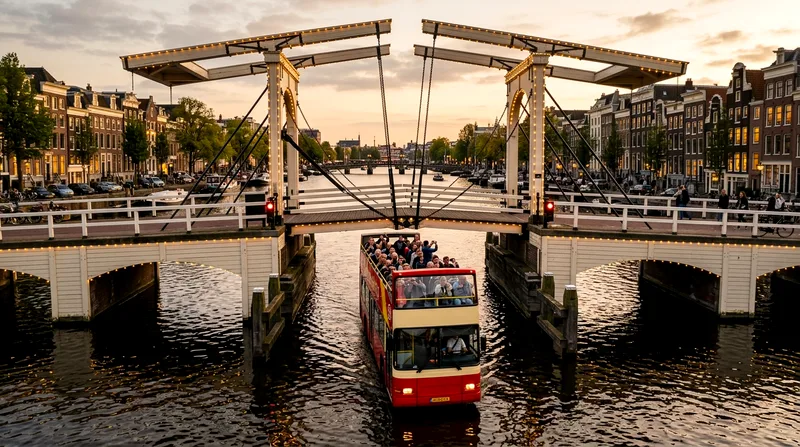
An Amsterdam hop-on hop-off bus ticket gets you unlimited rides on a loop of open-top or glass-roofed buses that circle the city's main sights, with recorded or live commentary in several languages. You buy once, then board and exit as many times as you like at any marked stop, as long as your pass is still valid. It's the tourist-bus model you'll recognize from Rome, Paris, or Berlin — Amsterdam's version just covers a tighter, more walkable footprint than those bigger capitals.
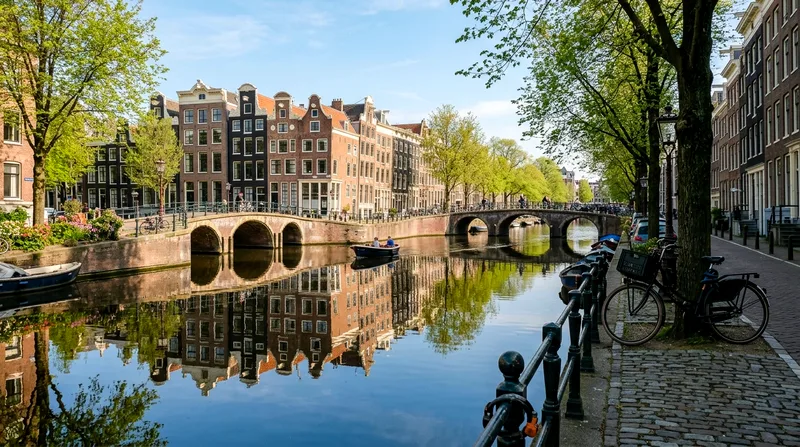
The appeal is obvious: no map-reading, no guessing which tram goes where, and a seat with a view of the Canal Ring instead of a crowded platform. The trade-off is just as real. Amsterdam's historic center spans roughly 2.5 by 2.5 kilometers, and traffic on single-lane canal streets means the bus often creeps along at walking pace during peak hours. I wouldn't recommend it as your only way to get around if you're staying more than two or three days — it's a sightseeing tool, not a transit replacement.
How the service works
You buy a ticket (paper voucher, mobile ticket, or sometimes a wristband), then board at any official stop — Dam Square, Centraal Station, and the Rijksmuseum area are typical starting points. Show your ticket or QR code to the driver or conductor, and you're free to ride the full loop or hop off at any stop to explore before catching a later bus. Most operators run one or two overlapping routes rather than a sprawling network, so switching lines usually means getting off and walking a short distance to a connecting stop.
Typical duration and frequency
A full loop generally takes 60 to 90 minutes without any stops, depending on traffic and time of day. Buses typically run every 15 to 30 minutes during the day, tapering off in the evening — operating hours are usually daytime only, roughly 9:00 or 10:00 to sometime between 18:00 and 19:00, so check the specific schedule before planning a late-afternoon start. Don't expect night service; if you want to see the canals lit up after dark, you're better off booking a separate evening canal cruise.
Routes, Stops & What You'll See
Most Amsterdam hop-on hop-off operators run a single main loop with 10 to 16 stops, occasionally supplemented by a second, shorter route or a connecting canal-boat ticket. The core loop almost always threads through the Canal Ring, past Dam Square, and out toward the museum quarter near Vondelpark, which covers the attractions that first-time visitors actually want to see. It's a sensible route on paper, but it also means you're paying for stops you might never use if your trip is concentrated in just one or two neighborhoods.
Main route highlights
Expect stops near Centraal Station, Dam Square, the Anne Frank House area in the Jordaan, the Van Gogh Museum and Rijksmuseum cluster by Museumplein, and often a stop near Vondelpark. Some routes loop through or near the Jordaan's quieter streets, a nice contrast to the busier Damrak corridor. If your itinerary is mostly Jordaan cafés and canal walks, though, you'll find the bus adds detours you don't need — walking directly between those points is often just as fast.
Key attractions at each stop
At the museum stop, you're within walking distance of both the Van Gogh Museum and the Rijksmuseum, plus the Stedelijk Museum — worth planning as a half-day block rather than hopping straight back on the bus. The Jordaan stop puts you near the Anne Frank House, where timed-entry tickets must be booked separately and in advance (they sell out days ahead, sometimes weeks during summer). The Dam Square stop is the most central, useful as a base for walking into the Red Light District or toward Centraal Station on foot.
Ticket Options & What's Included
Operators typically sell 24-hour and 48-hour hop-on hop-off passes, sometimes bundled with a canal cruise or a Madurodam/Zaanse Schans add-on for day-trippers. Prices for adult 24-hour tickets have typically run somewhere in the €25–€30 range, with 48-hour versions priced roughly €10–€15 higher — treat these as approximate and always confirm the current figure on the operator's official site before buying, since pricing shifts and promotional bundles change often.
24-hour vs. 48-hour passes
The 24-hour pass suits a single packed day where you want to cover Dam Square, the museum quarter, and the Jordaan without walking the whole loop twice. The 48-hour pass makes more sense if you're spreading sightseeing across two mornings — say, museums one day and canal-adjacent neighborhoods the next — because you're not racing the clock to use up the ticket in one go. For a stay longer than two days, neither option is good value; by day three you're better served by a GVB day pass or simply walking.
Inclusions and exclusions
Most tickets include the bus loop, recorded commentary, and sometimes a short canal boat ride as part of a combo package — check this carefully, because some listings advertise "canal cruise included" when it's really a discount voucher, not a free ride. Museum entry, the Anne Frank House, and I amsterdam City Card attractions are never included and must be booked separately. Audio commentary typically comes via headphones or onboard speakers in multiple languages, but quality varies, and I've found live guides (where offered) are more engaging than the recorded tracks on quieter routes.
Where & How to Buy Tickets
Buy directly through the operator's official website or at staffed kiosks near Centraal Station and Dam Square — these are the two most reliable points of sale in person. Street vendors and unofficial resellers near major attractions sometimes mark up prices or sell tickets for routes that don't match what was promised, so stick to official channels or well-known booking platforms that clearly name the operator and route map.
Official booking channels
Booking online in advance usually gets you a mobile ticket with a QR code, which skips the queue at the kiosk and lets you start the clock on your 24 or 48 hours whenever you actually board. If you'd rather compare multiple sightseeing options side by side — hop-on hop-off, canal cruises, combo museum passes — use a booking widget or aggregator that lists official operators rather than relying on a single company's page, since fares and bundle inclusions shift between providers.
Best time to purchase
Buy the night before or the morning of your first ride — there's rarely a discount for booking weeks ahead, unlike timed-entry museum tickets. Summer weekends (June through August) see longer queues at the main boarding points near Centraal Station, so if you're traveling then, book online and head straight to the stop rather than waiting at a ticket window. Outside peak season, walk-up purchase is usually fine.
Is It Worth It? Cost vs. Value
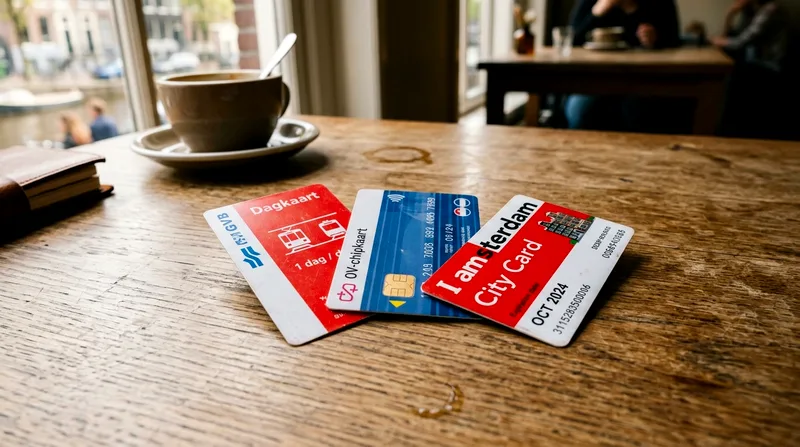
Run the numbers before you commit. A GVB single tram or bus ticket costs around €3.40 (one hour, with transfers), and a GVB 24-hour unlimited pass runs roughly €9–€10 — both far cheaper than a €25–€30 hop-on hop-off ticket. If your main goal is simply moving between the Van Gogh Museum, Dam Square, and the Jordaan, a GVB day pass plus a bit of walking will almost always beat the bus on price, and it's often faster too, since trams aren't stuck behind tour traffic on narrow canal streets.
Where the hop-on hop-off bus earns its cost is the commentary and the seated, no-navigation experience — genuinely useful for travelers with mobility limitations, or families juggling strollers and tired kids who don't want to figure out tram routes. Compare that to Bruges or Bruges-style walkable old towns, where hop-on hop-off buses feel almost redundant; Amsterdam sits in between — bigger than Bruges, far more compact than Berlin or Paris, where the bus genuinely saves walking time across sprawling districts.
A GVB day pass is consistently cheaper than a hop-on hop-off ticket, but the bus adds commentary and door-to-door ease that transit doesn't.
Amsterdam hop-on hop-off bus ticket cost vs. GVB transit alternatives
| Option | Typical cost | Duration | Best for |
|---|---|---|---|
| Hop-on hop-off 24-hour pass | approx. €25–€30 | 24 hours | First-time visitors, limited mobility |
| Hop-on hop-off 48-hour pass | approx. €35–€40 | 48 hours | Two-day sightseeing without a plan |
| GVB single tram/bus ticket | approx. €3.40 | 1 hour, with transfers | Short point-to-point trips |
| GVB 24-hour unlimited pass | approx. €9–€10 | 24 hours | Budget travelers, flexible routes |
| GVB 48-hour unlimited pass | approx. €14–€15 | 48 hours | Multi-day budget stays |
| Rental bike (daily) | approx. €10–€15 | 24 hours | Fit travelers, flexible routes |
Prices are typical published ranges and change over time — confirm current fares on the GVB and operator websites before booking.
Budget travelers
If you're counting euros, skip the bus. A GVB 24-hour or 48-hour ticket (around €9–€15 depending on duration) combined with comfortable shoes covers the same ground for less money, and Amsterdam's center is flat and genuinely pleasant to walk — unlike Rotterdam's more spread-out, car-oriented layout, or The Hague's longer distances between sights. Rent a bike instead (typical daily rates run €10–€15) if you want speed without transit costs; just know canal-side cycling in peak season means sharing narrow paths with a lot of tourists on rented bikes who aren't used to Amsterdam traffic rules.
Families and groups
For families with young kids or a group of four-plus, the math shifts. Group discounts on hop-on hop-off tickets, plus the convenience of not herding children through tram doors and GVB check-in card readers, can make the bus worth the premium. A family of four might pay €90–€110 total for 24-hour passes versus €35–€40 for a day of GVB tickets — a real gap, but one that buys less stress on a short trip. If your group is splitting time between Amsterdam and a day trip to Utrecht or Rotterdam, skip the hop-on hop-off bus for those legs; it doesn't cover intercity routes, and the train is both faster and simpler.
Frequently asked questions
Is the Amsterdam hop-on hop-off bus worth the money?
It depends on your priorities. If you want narrated sightseeing, minimal walking, and a fixed loop past major landmarks, it's worth the roughly €25–€30 for a day. If you're comfortable with trams or walking, a GVB day pass at under €10 covers the same attractions for far less, and often faster given Amsterdam's traffic-slowed canal streets.
How many routes does the Amsterdan hop-on hop-off bus have?
Most operators run one main loop, sometimes with a second shorter route or a connecting canal-boat line bundled into combo tickets. This is noticeably fewer routes than you'd find in Paris or Berlin, reflecting how compact Amsterdam's tourist core actually is — you rarely need more than one loop to hit Dam Square, the museum quarter, and the Jordaan.
Can you use the hop-on hop-off bus for regular commuting?
No. These buses run on tourist schedules with daytime-only hours, infrequent stops compared to GVB trams, and no night service. For actual commuting or efficient point-to-point travel, GVB trams, buses, and the metro are faster, cheaper, and run far more frequently throughout the day and evening.
What attractions are included on the hop-on hop-off route?
The bus stops near attractions like the Anne Frank House, Van Gogh Museum, Rijksmuseum, Dam Square, and Vondelpark, but the ticket only covers transport and commentary — not entry. Museum tickets, especially for the Anne Frank House, must be booked separately and often weeks in advance during summer.
How long is an Amsterdam hop-on hop-off ticket valid?
Standard options are 24-hour and 48-hour passes, starting from the time you first board rather than the time of purchase. There's no weekly or multi-day option in most cases — for stays longer than two days, switching to GVB day passes or walking is usually more practical and cheaper.