A 3-day Amsterdam itinerary for seniors with accessible attractions, seated canal cruises, rest stops, and discounts for a relaxed visit.
Who This Itinerary Is For
This Amsterdam itinerary for seniors is built for travelers who want the city's highlights without the forced marches that budget guides often assume you can handle. It suits retirees traveling as couples, friends touring Europe together, or anyone managing a hip replacement, arthritis, or just tired feet after 70 years of walking.
The pace is deliberately slow: two to three main activities a day, with built-in rest stops and alternatives if weather turns or legs give out. Amsterdam Tourism's own accessibility guidance flags that many 17th-century buildings have steps at entrances, narrow stairwells, and no lifts — this itinerary routes around those traps rather than pretending they don't exist.
It's not for anyone wanting to tick off ten attractions a day or chase nightlife until 2am — Amsterdam's Red Light District and club scene aren't the focus here, though nothing stops you from adding an evening stroll through De Jordaan if you're up for it. If you're traveling with grandchildren in tow, this itinerary's pace works for families too, since slower mornings and seated boat tours suit young kids as much as older knees. Couples celebrating an anniversary, LGBT travelers wanting a relaxed base near Amsterdam's gay-friendly Reguliersdwarsstraat bars, and solo senior travelers will all find this workable without modification.
Day 1: Canal Cruises & Museum Highlights
Day one eases you in with Amsterdam's single most senior-friendly activity — sitting down while the city moves past you.
Seated canal cruises and the Rijksmuseum offer the easiest access, while the Anne Frank House remains the least senior-friendly major attraction due to its stairs.
Amsterdam itinerary for seniors: comparing key activities by accessibility and pace
| Activity | Typical Duration | Seating/Rest | Step-Free Access | Best For |
|---|---|---|---|---|
| Seated canal cruise | 60-75 min | Full seating | Yes (most boats) | Low-effort sightseeing |
| Rijksmuseum | 2-3 hours | Benches throughout | Yes, lifts available | Art lovers, rainy days |
| Zaanse Schans coach trip | 4-5 hours | Benches outdoors | Mostly flat gravel | Day trip with light walking |
| Anne Frank House | 1-1.5 hours | Limited | No, steep stairs | Travelers without mobility limits |
| Van Gogh Museum | 2 hours | Seating in most rooms | Yes, lifts available | Alternative to Anne Frank House |
| Nine Streets walk | 1-2 hours | Café stops | Yes, flat paving | Gentle afternoon stroll |
Durations and access features are typical; always confirm current accessibility details when booking, since older buildings vary.
Morning: Seated canal cruise
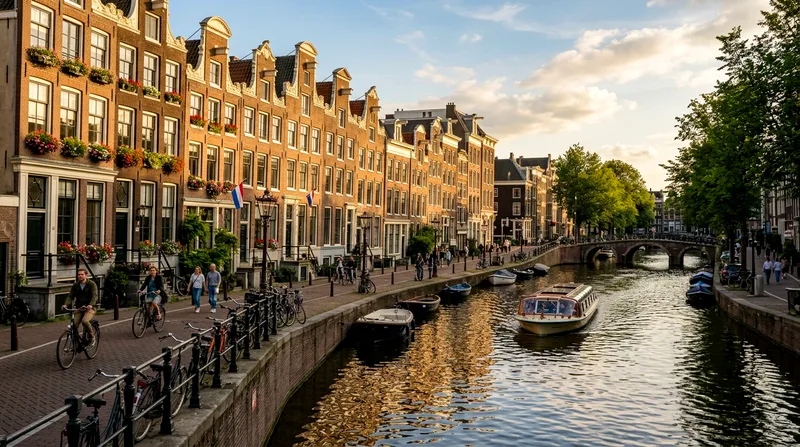
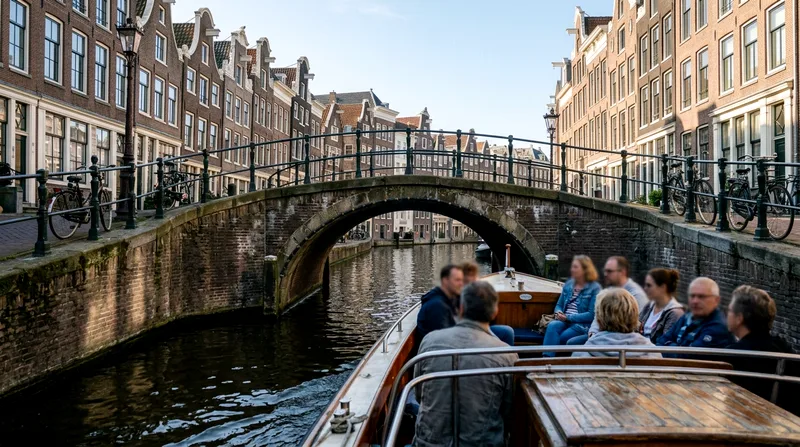
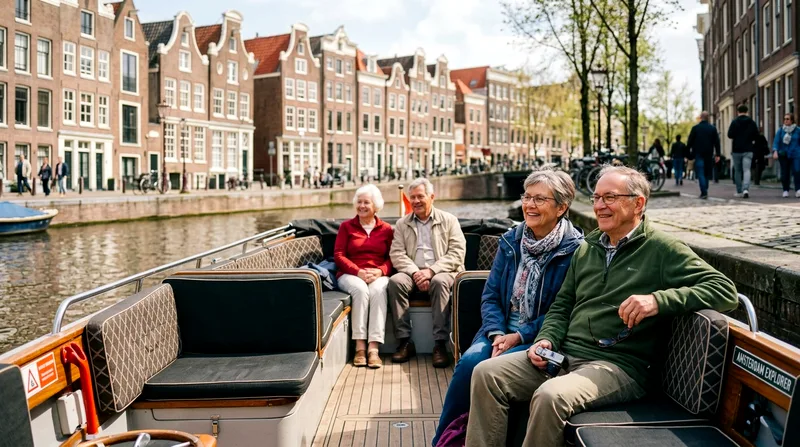
Book a seated canal cruise for 10am, before the midday crowds hit the main boarding docks near Centraal Station and Damrak. Most boats have covered, heated cabins with padded bench seating and large windows — far more comfortable than walking the same canal-side route on uneven brick pavement. A standard round-trip runs 60 to 75 minutes, enough to see the Golden Bend mansions, Anne Frank House exterior, and the Skinny Bridge without anyone needing to stand. Avoid the open-top party boats; they're louder, less covered, and the seating is often bench-style without back support. Compare current canal cruise times and accessible boarding options before you book, since some operators use boats with ramps and others still require a step down from the dock.
Afternoon & evening: Museum with seating
After lunch near Museumplein — the Cobra Café has outdoor seating and flat access — spend the afternoon at the Rijksmuseum. It's one of the better accessible museums Amsterdam offers: lifts to all floors, wheelchairs available free at the entrance, and benches placed in nearly every major gallery, including the Gallery of Honour where Rembrandt's The Night Watch hangs. Budget three hours but treat it as flexible; there's no obligation to see all 80 rooms. Rick Steves' guides consistently point to the Rijksmuseum over the Van Gogh Museum for seniors specifically because of its slower crowd flow and wider corridors. Finish with an early dinner in the Museum Quarter rather than trekking back to the center hungry.
Day 2: Accessible Day Trip & Relaxed Exploration
Day trips are where itineraries usually go wrong for older travelers — cobblestone villages, long walks between stops, no public toilets. This day is designed to avoid that.
Morning: Coach trip to Zaanse Schans or Volendam
Book a coach tour to Zaanse Schans rather than the train-plus-bus combination — a direct coach with door-to-door pickup saves the transfers that wear people out. Zaanse Schans itself is mostly flat gravel paths among working windmills, with benches scattered along the main walkway and accessible toilets near the visitor center. If uneven paths worry you, Volendam is the gentler alternative: its harbor promenade is paved and level, lined with cafés where you can watch fishing boats without walking far. Rotterdam's Kinderdijk windmills are often compared to Zaanse Schans, but they involve more walking between mill clusters — Zaanse Schans wins for compactness. Half-day tours typically run four to five hours including transport; full-day combination tours adding Marken can double that, which is more than most seniors want on a single excursion.
Afternoon & evening: Rest and local exploration
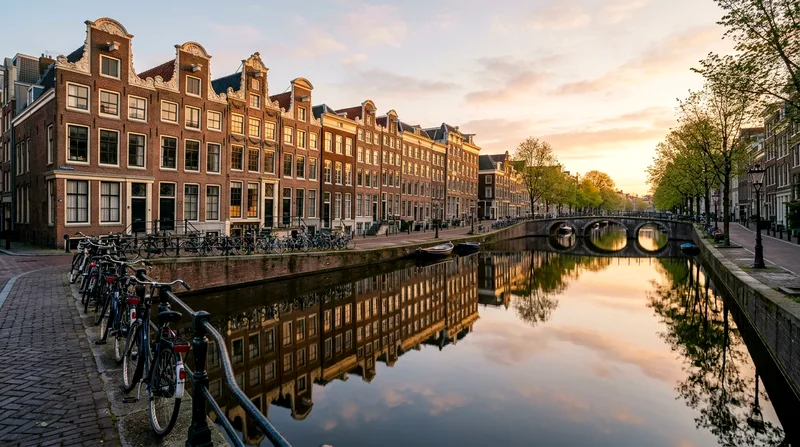
Back in Amsterdam by mid-afternoon, resist the urge to pack in another attraction. Use this stretch as genuine downtime — a nap, a slow coffee near your hotel, or a short stroll through a quiet residential canal like Herengracht's southern stretch, which has fewer tourists and flatter pavement than the Jordaan's narrower streets. If energy holds, the Hortus Botanicus garden offers paved paths and plenty of benches for an easy hour outdoors. This is also a good evening to skip dinner reservations and eat near your hotel — ambition on day two tends to cost you on day three.
Day 3: Indoor Museums & Gentle Sightseeing
The final day stays indoors and unhurried, which also makes it your best weather backup if day one or two got rained out.
Morning: Accessible museum visit
The Anne Frank House is historically essential but genuinely difficult for anyone with mobility issues — steep, narrow staircases with no lift access to the Secret Annex, a known limitation the museum itself states plainly on its accessibility page. If stairs are a concern, swap it for the Van Gogh Museum, which has full lift access, wide galleries, and seating in most rooms, or the Hermitage Amsterdam, housed in a former almshouse with step-free entry and benches throughout. Book timed-entry tickets in advance for whichever you choose — Rijksmuseum and Van Gogh Museum both sell out same-day slots by late morning.
Afternoon & evening: Leisurely neighbourhood walk
Spend the afternoon in De Negen Straatjes (the Nine Streets), a compact shopping grid with flat paving and frequent café stops — far easier going than the sloped bridges around the Jordaan. Plan for short bursts of walking, 15 to 20 minutes between sit-down breaks, rather than one long loop. This neighborhood also works well if travel companions want to browse shops while others rest at a café table nearby. End the trip with an early dinner rather than a late one; Amsterdam restaurants fill up after 7pm and waiting for a table is its own kind of fatigue.
Getting Around Amsterdam as a Senior
Amsterdam's flatness is its biggest advantage for senior travellers — there are no hills to contend with anywhere in the historic center, unlike parts of Utrecht or the steeper approaches around Cologne's cathedral quarter. The challenge is cobblestones and tram gaps, not elevation.
Public transport accessibility
GVB Amsterdam, the city's public transit operator, runs low-floor trams and buses on most routes, with audio and visual stop announcements. Trams 2, 12, and 17 serve the museum district and city center with accessible boarding, though some older tram stops still have a step up of several centimeters — not ideal with a cane. An OV-chipkaart or contactless bank card works for all trams, buses, and the metro; day passes cost around €9 to €10 and remove the hassle of calculating individual fares. Avoid rush hour trams between 8am and 9:15am, when seating fills fast and standers crowd the aisles.
Taxi and ride-share options
For shorter hops or when legs are simply done for the day, taxis are plentiful and metered fairly — expect roughly €15 to €20 for a cross-city ride. Uber operates in Amsterdam but isn't noticeably cheaper than a standard taxi stand. If you're staying somewhere like the Museum Quarter, walking is often faster than waiting for a car in traffic, but don't force it on a tired afternoon — flag a taxi instead.
Where to Base Yourself
Where you sleep determines how much walking this itinerary actually requires, so don't underrate this decision.
Central location near attractions
Base yourself in the Museum Quarter or near Centraal Station rather than the Jordaan or De Pijp — both charming, but both require longer walks or tram transfers to reach the Rijksmuseum, canal cruise docks, and day-trip coach pickup points. A hotel within a 10-minute flat walk of Museumplein cuts your daily transit needs roughly in half compared to staying further out. Compare this to Bruges or Utrecht, where the entire old center is walkable in 20 minutes — Amsterdam is larger, so location matters more here.
Accessibility features to prioritise
When booking, confirm three things directly with the hotel: elevator access to your floor (some canal house hotels only have stairs above the ground level), a roll-in or walk-in shower rather than a high tub lip, and proximity to a tram stop rather than just "city center" marketing language. Accessible Amsterdam, an independent resource covering the city's disability access, is a useful cross-check against hotel claims — hotel websites sometimes overstate what "accessible" actually means.
Bookable Senior-Friendly Experiences
Three experiences in this itinerary are worth reserving ahead rather than winging it: the seated canal cruise, the Zaanse Schans or Volendam coach day trip, and timed museum entry for the Rijksmuseum or Van Gogh Museum. All three sell out or fill their accessible slots by mid-morning during busy months, particularly April through September.
Many operators offer senior discounts, typically 10-15% off standard adult pricing, though this varies and isn't guaranteed — always ask when booking rather than assuming. Museumkaart, a Dutch museum pass, can save money if you're visiting three or more museums, but it requires an upfront cost that only pays off on longer stays. Compare current prices and accessible departure times for canal cruises and day trips before you commit, since boat and coach accessibility varies more than brochures suggest — some vessels still require a step down from the dock that isn't mentioned until you arrive.
Frequently asked questions
What are the best tours in Amsterdam for seniors?
Seated canal cruises and half-day coach trips to Zaanse Schans are the most senior-friendly bookable tours — both minimize walking and offer covered, heated seating. Avoid walking tours longer than 90 minutes unless they're explicitly described as slow-paced or step-free, since standard guided walks often cover 3-4km over cobblestones.
How accessible are Amsterdam's main attractions?
It's mixed. The Rijksmuseum and Van Gogh Museum have full lift access and plentiful seating. The Anne Frank House has no lift to its upper floors and steep, narrow stairs, making it genuinely difficult for anyone with limited mobility. Always check an attraction's own accessibility page before booking rather than relying on general reviews.
Are there senior discounts available in Amsterdam?
Some museums and tour operators offer reduced senior pricing, often 10-15% off, but it's not universal and usually requires ID proof of age (65+ in most cases). Always ask at time of booking rather than assuming a discount applies automatically.
What is the best way for seniors to get around Amsterdam?
GVB's low-floor trams cover the city center well and are the most practical option, paired with taxis for longer or tiring trips. An OV-chipkaart or contactless card simplifies fares. Avoid renting a bike unless you're an experienced, confident cyclist — Amsterdam traffic is fast-moving and unforgiving to hesitant riders.
Which museums in Amsterdam have seating areas?
The Rijksmuseum, Van Gogh Museum, and Hermitage Amsterdam all have benches in most galleries and full lift access between floors. The Anne Frank House is the notable exception, with minimal seating and no lift to its upper levels.