Compare Amsterdam's top tourist passes: pricing, coverage, public transport, and savings. Find which pass saves most for your trip length.
The Four Major Passes at a Glance
Amsterdam city pass comparison shoppers usually land on one of four products: the I Amsterdam City Card, Go City Amsterdam, the Holland Pass, and the Museumkaart. They solve different problems, and conflating them is the main reason people overpay or underuse what they bought.
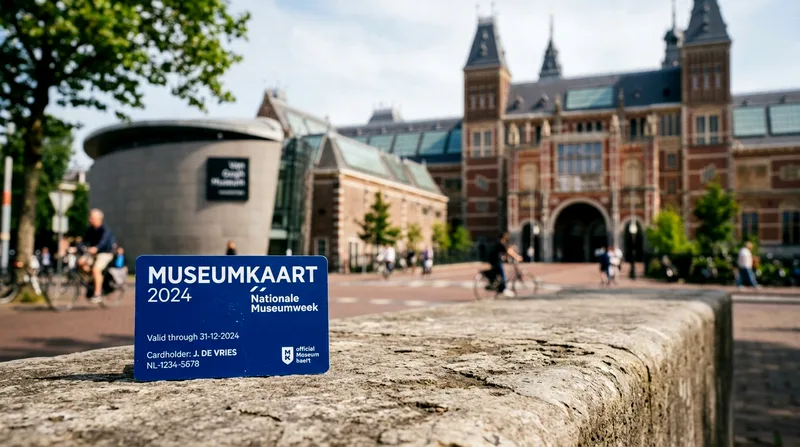
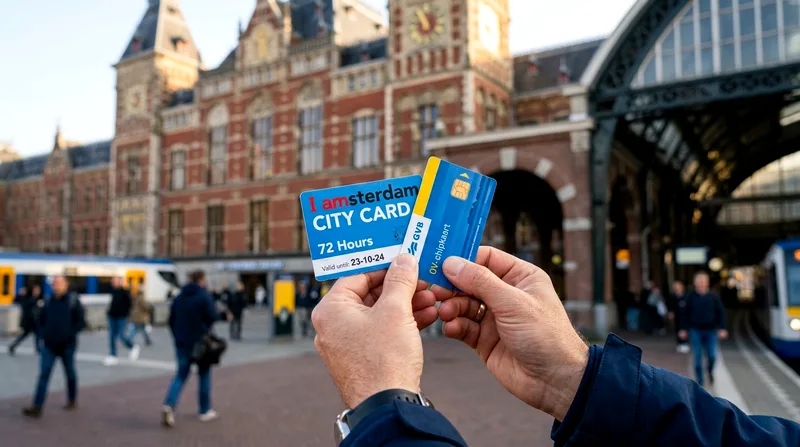
The I Amsterdam City Card is the all-in-one option — it bundles free entry to dozens of museums and attractions with unlimited GVB public transport (trams, buses, the metro, and some ferries) for the card's duration. Go City runs on a different model: you pick either an "All-Inclusive" pass (unlimited attractions within a time window) or an "Explorer" pass (a fixed number of attractions chosen from a list, usable over 60 days). Holland Pass sells credits rather than blanket access — you get a set number of "choice" vouchers to redeem at attractions of varying point values, which suits travelers planning day trips beyond the city to Zaanse Schans or Keukenhof. The Museumkaart is the odd one out: a Dutch-resident-style annual museum membership (also sold to tourists) that gets you into more than 400 museums nationwide for a full year, but it does not include transport or non-museum attractions like canal cruises.
If you only remember one distinction, remember this: the I Amsterdam City Card and Go City All-Inclusive reward speed and density — cramming in attractions — while Holland Pass and Museumkaart reward spread-out, selective visits.
I Amsterdam City Card overview
The card comes in 24, 48, 72, 96, and 120-hour versions, roughly priced from €65 for 24 hours up to around €145 for 120 hours (check current prices when booking, since these shift seasonally). It covers the Van Gogh Museum, the Rijksmuseum, the Stedelijk Museum, a canal cruise, and dozens of smaller sites, plus unlimited GVB transport. Anne Frank House is notably excluded — it runs its own timed-ticket system and almost never partners with passes, which trips up a lot of first-time buyers.
Go City, Holland Pass, and Museumkaart basics
Go City's Explorer pass (pick 2, 3, 4, or 5 attractions from a list of roughly 25+) suits travelers who want flexibility over 60 days rather than a tight 24-to-120-hour window. Holland Pass sells in tiers (Small, Medium, Large, roughly 3 to 6 credits), with premium attractions like the Rijksmuseum costing more credits than smaller sites — plan your list before buying or you'll run short. The Museumkaart costs around €65-70 for adults for a full year and pays for itself after about three to four full-price museum visits, but it offers zero transport or cruise inclusion.
Head-to-Head: Coverage, Cost, and Validity
Coverage is where these passes diverge hardest. The I Amsterdam City Card includes the Van Gogh Museum, Rijksmuseum, Stedelijk Museum, Hermitage Amsterdam, a one-hour canal cruise, and the Heineken Experience on some tiers — but not Anne Frank House, and not always Madame Tussauds. Go City's roster typically includes Madame Tussauds, a canal cruise, and the Body Worlds exhibit, with the Van Gogh Museum and Rijksmuseum sometimes requiring the higher-tier pass or appearing as "premium" redemptions that use up two credits instead of one. Holland Pass tends to favor attractions outside the center — windmill villages, Keukenhof in season, Madurodam — alongside a slimmer core list of Amsterdam museums.
Skip-the-line access is inconsistent across all three commercial passes. The I Amsterdam City Card gives genuine skip-the-line entry at the Van Gogh Museum and Rijksmuseum, which during peak summer months can save 45 minutes or more. Go City's skip-the-line claims apply unevenly — some partner attractions still require a separate timed booking even with the pass, so always check the fine print before assuming you can walk straight in. Holland Pass rarely advertises skip-the-line as a core benefit; it's really a discount-and-bundling tool, not a queue-avoidance one.
The I Amsterdam City Card is the only pass bundling unlimited public transport, while the Museumkaart offers the longest validity at the lowest entry cost for museum-only travelers.
Amsterdam city pass comparison: pricing, transport, and validity
| Pass | Typical Price Range | Public Transport | Validity | Best For |
|---|---|---|---|---|
| I Amsterdam City Card | approx. €65-145 | Unlimited GVB included | 24-120 consecutive hours | Dense 2-3 day museum + transport trips |
| Go City Amsterdam | approx. €60-130 | Not included | 1 day (All-Inclusive) or 60 days (Explorer) | Flexible attraction-picking, longer stays |
| Holland Pass | approx. €60-110 | Not included | Several months | Day trips beyond Amsterdam, mixed itineraries |
| Museumkaart | approx. €65-70 | Not included | 1 full year | Repeat visitors, slow sightseeing, museum-only focus |
Typical figures based on standard published tiers; always check current prices when booking, as rates shift seasonally and by age bracket.
Attraction inclusion and skip-the-line benefits
If skip-the-line matters more to you than raw attraction count, the I Amsterdam City Card is the stronger bet for the Rijksmuseum and Van Gogh Museum specifically. For Anne Frank House, no pass helps — you must book a timed ticket directly from the official website, released six weeks ahead with a small same-day release most mornings at 9am. Don't buy any pass expecting it to solve that bottleneck.
Public transport and validity windows
Only the I Amsterdam City Card bundles unlimited GVB transport. A standalone 24-hour GVB ticket costs around €9, so if you're taking four or more rides a day, that inclusion alone offsets a meaningful chunk of the card price. Go City and Holland Pass passholders pay for trams and buses separately, which matters if your hotel sits outside the center near Amsterdam Zuid or Noord. Validity windows also behave differently: the I Amsterdam City Card and Go City All-Inclusive run on consecutive hours from first use, while Go City Explorer and Holland Pass give you a longer redemption window — useful if you're combining Amsterdam with day trips to Rotterdam or Utrecht and don't want to burn a tight countdown.
Price Per Attraction: Which Saves Most
The only honest way to judge an Amsterdam pass cost comparison is cost-per-attraction against what you'd pay buying tickets individually. Do the math before you buy, not after.
Cost-per-museum calculation method
Take the pass price, subtract the value of transport if included (use the €9/day GVB rate as your benchmark), then divide the remainder by the number of attractions you'd realistically visit in the validity window. A 48-hour I Amsterdam City Card at roughly €95, minus two days of transport (€18), leaves €77 spread across, say, four attractions — about €19 each. Compare that to standalone admission.
Baseline individual ticket pricing
For reference: the Rijksmuseum runs around €22.50, the Van Gogh Museum around €22, Anne Frank House around €16 (plus mandatory online booking fee), Madame Tussauds around €26, and a standard one-hour Amsterdam Canal Cruise around €18-20. Stack three or four of those and you're past €80 before lunch — which is exactly the threshold where the I Amsterdam City Card or Go City All-Inclusive starts winning. If your list is only two attractions, skip the pass entirely; individual tickets plus a day GVB ticket will almost always be cheaper.
Who Should Buy Which Pass
No single pass wins for everyone, and anyone telling you otherwise is selling something. The right answer depends on how many attractions you'll actually visit, whether you need transport bundled, and how your days are structured.
Museum-focused vs mixed-activity travelers
If your Amsterdam itinerary is Rijksmuseum, Van Gogh Museum, Stedelijk, and maybe the Rembrandt House in two days, the I Amsterdam City Card usually beats buying separately once you factor in transport. If you're mixing museums with Madame Tussauds, a canal cruise, and a brewery tour, Go City's All-Inclusive pass often covers a wider spread of non-museum entertainment. Travelers who want a slower pace — one or two museums a week over a longer Dutch trip including Utrecht or The Hague — are better off with the Museumkaart, since it never expires on a clock and works at participating museums nationwide.
Solo, family, and multi-day visitor profiles
Solo travelers on a tight 48-hour visit get the most use from the I Amsterdam City Card because transport savings compound with every tram ride. Families should check child pricing carefully — the I Amsterdam City Card and Go City both offer youth rates, but kids under a certain age often get free museum entry anyway, which can make a family pass purchase for children a waste. Multi-day visitors staying five or more nights almost never benefit from the short-validity passes; by day four you're paying for coverage you've already used up, so switching to individual tickets or a Museumkaart is the smarter move.
Quick Recommendation by Trip Length
For a single day in Amsterdam, skip every pass on this list — buy a GVB day ticket (~€9) and pay individual admission for one or two attractions. No pass breaks even on one day unless you're visiting three premium sites back to back, which is an exhausting way to spend 24 hours anyway.
For two to three days, the I Amsterdam City Card is the strongest all-rounder, particularly if your hotel is outside the center (Amsterdam Oost or near Sloterdijk) and you'll lean on trams daily. Go City's All-Inclusive pass is a close second if Anne Frank House isn't on your list and you'd rather pick from a broader attraction menu including Madame Tussauds.
For five or more days, drop the time-boxed passes altogether. A Museumkaart plus separate GVB tickets as needed will almost always cost less than two consecutive multi-day passes, and it leaves you free to day-trip to Rotterdam, Bruges, or Berlin without worrying about a countdown clock burning on days you're not even in the city. Compare current prices and attraction lists before you book, since inclusions and seasonal rates shift — but the trip-length logic above holds regardless of which year you're traveling.
CAPTION: Visitors using tourist pass QR codes at a museum entrance scanner in central Amsterdam. ALT_TEXT: Amsterdam city pass comparison entry scan at museum, showing skip-the-line pass use PLACEMENT_SECTION: quick-recommendation-by-trip-length PLACEMENT_POSITION: top
Frequently asked questions
Which Amsterdam pass is worth buying?
For most 2-3 day visitors hitting three or more major museums and riding trams daily, the I Amsterdam City Card is worth it because it bundles unlimited GVB transport with skip-the-line entry to the Rijksmuseum and Van Gogh Museum. If your list is shorter or spread over a week, it's not worth it — individual tickets or a Museumkaart will cost less.
Does the I Amsterdam City Card include public transport?
Yes — it includes unlimited GVB trams, buses, the metro, and some ferries for the full duration of the card, from 24 up to 120 hours. This is the single biggest differentiator versus Go City and Holland Pass, neither of which includes transport.
What is the difference between Go City and Holland Pass?
Go City offers either unlimited attraction access within a short time window (All-Inclusive) or a fixed number of attraction credits usable over 60 days (Explorer), with a city-focused attraction list. Holland Pass uses a point-based voucher system and leans more toward day-trip destinations like Keukenhof and Zaanse Schans alongside Amsterdam sights.
How much can you save with an Amsterdam tourist pass?
Savings depend entirely on how many attractions you pack in. Visiting four premium sites (Rijksmuseum, Van Gogh Museum, a canal cruise, and Madame Tussauds) individually costs roughly €85-90; a well-matched multi-day pass covering the same list, with transport included, can bring the effective cost down by 20-35%. Visit only two attractions and you'll likely lose money on a pass.
Which pass is best for a 1-day vs 3-day trip?
For one day, skip passes entirely and buy individual tickets plus a GVB day ticket. For three days, the I Amsterdam City Card usually offers the best combined value because the transport savings and skip-the-line access compound across multiple museum visits and tram rides.