Save on Amsterdam family tickets with the right passes, free-entry ages, and booking timing. Practical strategies to cut costs without cutting corners.
Where your family money goes in Amsterdam
Amsterdam isn't cheap, but it's not as brutal as London or Paris if you plan the spending rather than let it happen to you. The big line items are museum entry, transport, and canal cruises — in that order for most families. A single adult ticket to the Rijksmuseum runs about €22.50, Van Gogh Museum sits around €22-24 depending on timed slot, and the Anne Frank House charges roughly €16 for adults and €7 for ages 10-17 (children under 10 aren't admitted at all, which catches a lot of parents off guard when booking).
Stack three or four attractions across a family of four and you're easily at €150-250 before food, transport, or a single canal cruise. That's the number that makes people search for passes, and rightly so — but the passes only pay off if your itinerary actually uses them.
Typical family-of-four budget breakdown
For two adults and two kids (ages 8 and 12) doing a three-day trip with four museums, a canal cruise, and local transport, expect somewhere between €450 and €650 on tickets and transit alone, excluding food and lodging. Museums account for roughly 55-60% of that, transport another 15%, and a canal cruise or boat tour adds €60-90 for the family depending on operator and whether you book through Viator, GetYourGuide, or direct with the cruise company. Compare that to Berlin, where major museums average €10-14 per adult, and Amsterdam starts to look pricier on paper — though Amsterdam's attractions are more tightly clustered, so you save on internal transport what you lose on entry fees.
Transport, museums, and activities costs
GVB, Amsterdam's public transit operator, charges per-trip fares around €3.40 for a single tram or bus ride if you tap in with a contactless card, or you can buy unlimited day passes starting around €9 for 24 hours and scaling down per-day the longer you buy (48-hour, 72-hour, etc.). For a family doing more than four rides a day, a multi-day GVB pass beats single fares easily. Activities outside museums — Vondelpark, NEMO's outdoor roof terrace, the free ferry across the IJ behind Amsterdam Centraal — cost nothing and should anchor at least one full day of your itinerary, especially with younger kids who won't last through back-to-back museum visits anyway.
Passes and combo tickets that save money
This is where families either save real money or waste it on a pass they don't use fully. The math only works if you're hitting enough paid attractions to offset the card price — otherwise you're better off buying direct.
The I Amsterdam City Card pays off fastest for families doing four or more paid attractions plus transport over several days.
Amsterdam family discount pass and ticket options compared
| Option | Typical Cost (family of 4, 3 days) | Covers Transport | Covers Anne Frank House / Van Gogh | Best For |
|---|---|---|---|---|
| I Amsterdam City Card | Approx. €250-270 | Yes | No | Museum-heavy, multi-day trips |
| Individual museum tickets + GVB day passes | Approx. €300-380 | Separate purchase | Yes, if booked | Families with 2-3 specific worth seeing museums |
| Museum tickets only, walking everywhere | Approx. €220-300 | No | Yes, if booked | Compact itineraries, older kids who can walk |
| Canal cruise + 1-2 museum combo ticket | Approx. €140-180 | No | Depends on combo | Short 1-2 day visits |
Figures are approximate and vary by season, child ages, and exact attraction choices; always check current prices before booking.
I Amsterdam City Card for families
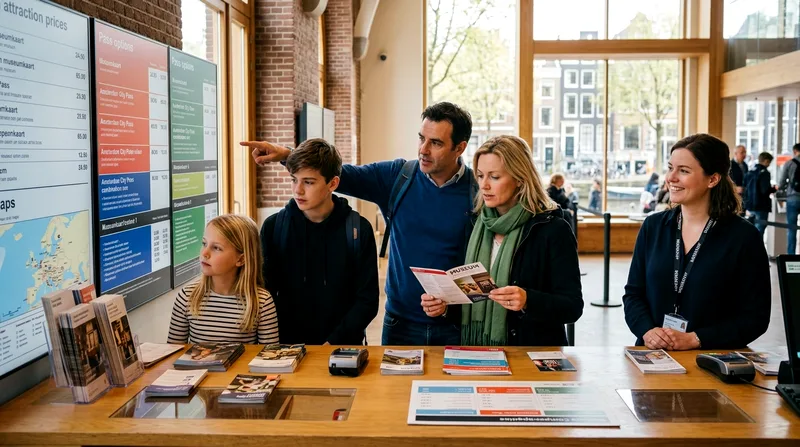
The I Amsterdam City Card bundles free entry to over 70 museums and attractions (including the Rijksmuseum and Amsterdam Museum, though notably not the Anne Frank House or Van Gogh Museum, which require separate timed tickets), unlimited GVB public transport, and a free canal cruise, sold in 24, 48, 72, 96, and 120-hour increments. Adult pricing for a 72-hour card runs roughly €85-90; children's cards (ages 4-12) are discounted, usually around half the adult rate. For a family doing the Rijksmuseum, Amsterdam Museum, a science museum like NEMO, and a canal cruise over three days, the card typically pays for itself and then some once you factor in the transport included. If your plan is just the Anne Frank House and Van Gogh Museum — two of the biggest draws — skip it. Those aren't covered, and you'd be paying for transit and entries you won't use.
Public transport passes and group rates
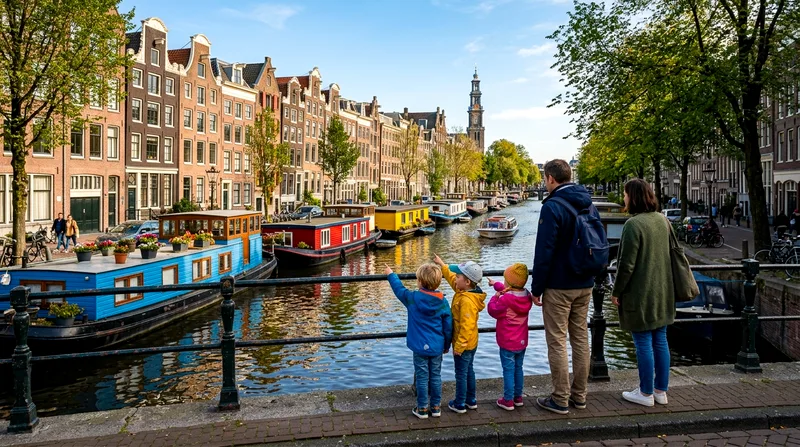
If the City Card doesn't fit, buy GVB day passes separately — a family of four doing a 48-hour pass each instead of single fares usually saves 20-30% if you're making six or more trips total. GVB doesn't offer a dedicated "family" multi-pass, so you're buying individual passes per person, but children under 4 ride free on all GVB trams, buses, and metro lines, no ticket needed. For slower-paced families who'll mostly walk between Jordaan, the Museum Quarter, and Centraal, skip transit passes entirely — Amsterdam's center is compact enough that a family can cover most sights on foot or by rented bikes, which is often cheaper and more memorable than another day pass.
Free entry ages and what kids don't pay for
This is the single most overlooked savings lever, and it's frustrating how buried this information usually is on attraction websites. Age cutoffs vary attraction by attraction, so check before you plan assuming "kids are free" applies everywhere — it doesn't.
Age thresholds across major museums
The Rijksmuseum is free for visitors under 18 — a genuinely generous policy that alone can save a family of four with two teenagers close to €45. The Van Gogh Museum charges for everyone aged 18 and under at a reduced youth rate but isn't free for minors; check the exact band when booking since it's shifted in recent seasons. The Anne Frank House has a hard minimum age of 10 for admission (it's genuinely unsuitable for younger children given the subject matter) and charges a reduced rate from 10-17. The Amsterdam Museum offers free entry under 18, matching the Rijksmuseum's policy. None of these overlap neatly, so build your itinerary around the Rijksmuseum and Amsterdam Museum first if you're traveling with teenagers — the savings there are the largest and most straightforward.
Free activities and public spaces
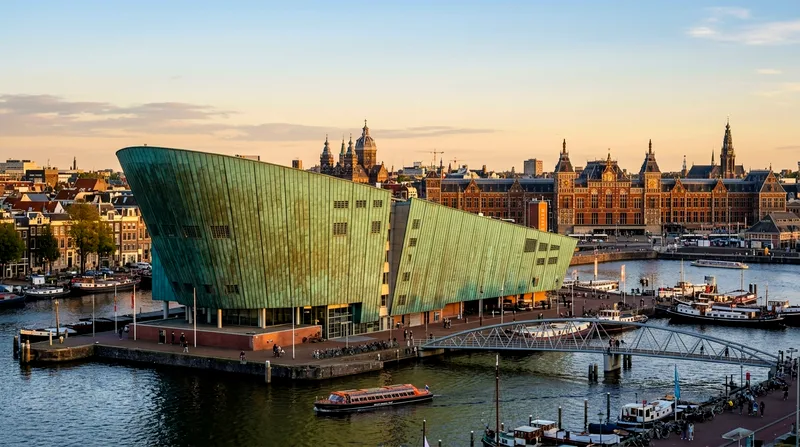
Vondelpark costs nothing and has a free playground, open grass for picnics, and a decent café if you want to sit down. The free ferries behind Centraal Station (Buiksloterweg and IJplein routes) cross the IJ river in about four minutes and give young kids a boat ride without paying for a cruise. Albert Cuyp Market in De Pijp is free to walk, loud, and a better sensory experience for kids than a lot of paid attractions. NEMO Science Museum charges for the interior but its stepped rooftop terrace is free and gives one of the better skyline views in the city. None of this replaces a museum day, but stacking one free day against two paid days meaningfully drops your average daily spend.
Booking strategies that maximize savings
How and when you book matters almost as much as what you book. Amsterdam's major museums now run almost entirely on timed-entry ticketing, and that changes the calculus compared to cities like Rotterdam or The Hague where walk-up entry is still common.
Advance booking and early-bird discounts
Book the Anne Frank House and Van Gogh Museum weeks ahead — both release tickets on a rolling schedule (the Anne Frank House releases new slots regularly, and tickets for popular dates disappear within days during school holidays). There's no meaningful walk-up option for either anymore, so "saving money by deciding later" isn't really available; late bookers often end up paying resale markups through third-party platforms instead. Early morning slots (9:00-10:00am) are usually easier to get and mean you're done before the crowds peak, which matters more with young kids who tire by early afternoon anyway.
Off-season timing and shoulder-season deals
Entry prices themselves don't fluctuate by season in Amsterdam the way hotel rates do, but your real savings come from avoiding peak crowding costs — fewer forced add-ons, less pressure to book premium skip-the-line add-ons because regular slots are already sold out. Visiting in November, January, or early March (outside Christmas week) means more availability at standard ticket prices, shorter queues for the free activities like Vondelpark or the ferries, and better odds of snagging city card deals bundled with accommodation. Compare that to July or the King's Day period in late April, when every popular slot fills fast and families end up paying for pricier last-minute options. If you have school-age kids and flexibility, shoulder season (April before King's Day, or September-October) balances decent weather against lower pressure on ticketing.
What's not worth cutting corners on
Saving money shouldn't mean building a trip around compromises that ruin the day. There are two places where I'd tell families to spend properly rather than hunt for the cheapest option.
Skip-the-line tickets and timed entries
Don't try to save a few euros by buying a generic combined ticket from a third-party reseller instead of booking directly with the museum when direct booking is available — you risk invalid QR codes or slots that don't match the museum's actual calendar, which has genuinely stranded families at the door. Platforms like Viator and GetYourGuide are useful for bundled canal cruise and museum combos where the convenience and fixed combo pricing add real value, but for single-museum entry, book directly with the Rijksmuseum, Van Gogh Museum, or Anne Frank House whenever that option exists. The few euros you might save elsewhere isn't worth the risk of a canceled afternoon with tired kids.
Quality experiences over budget alternatives
Skip the bargain-basement canal cruise operators clustered near Centraal Station promising rock-bottom prices — boats are often older, narration is recorded rather than live, and departure times are vague. A mid-range cruise with a live guide, départing from a fixed dock near the Museum Quarter or Jordaan, costs maybe €5-10 more per adult and is considerably better for keeping kids engaged for 60-75 minutes. Similarly, don't swap the Anne Frank House for a cheaper "Jewish quarter walking tour" as a substitute — they cover different things, and for families who specifically want that history, no free alternative really replaces it. If budget is still the deciding factor, cut a museum from the list rather than downgrading the ones you keep.
Frequently asked questions
Do children pay for public transport in Amsterdam?
Children under 4 ride free on all GVB trams, buses, and metro lines without needing a ticket. Kids aged 4 and up pay the same fare as adults — there's no reduced youth fare on GVB, so a day pass or the I Amsterdam City Card's included transport is usually the better deal for families with older children.
What is the I Amsterdam City Card and how much does it save families?
It's a prepaid card covering free entry to over 70 attractions (including the Rijksmuseum and Amsterdam Museum), unlimited GVB transit, and one canal cruise, sold in 24- to 120-hour increments. A 72-hour card runs roughly €85-90 per adult with discounted child pricing. It typically saves money for families visiting four or more paid attractions over several days, but it doesn't cover the Anne Frank House or Van Gogh Museum, so check your worth seeing list against the included attractions first.
Which museums require advance ticket purchase?
The Anne Frank House and Van Gogh Museum both operate on mandatory timed-entry systems with no walk-up tickets sold on-site during peak periods. The Rijksmuseum sells on-site tickets but queues can run long without a pre-booked slot. Book these at least two to three weeks ahead during school holidays and peak summer months.
Are there free activities for kids in Amsterdam?
Yes — Vondelpark's playground and open lawns, the free ferries across the IJ behind Centraal Station, Albert Cuyp Market, and NEMO's rooftop terrace all cost nothing. Building one full free day into a three-day itinerary is a realistic way to lower your average daily spend without cutting a major attraction.
How much can a family of four save with passes and combos?
Realistically, 30-50% off a disorganized, pay-as-you-go approach, mainly by combining free-entry age thresholds (under-18 free at the Rijksmuseum and Amsterdam Museum), a well-matched multi-day pass if your itinerary is museum-heavy, and advance-booked timed tickets to avoid resale markups. The savings come from matching the pass to the itinerary, not from stacking every discount scheme available.